Task 1: Quiz Present Simple or Present Continuous
Task 2: Pr. Simple or Pr. Continuous
Task 3: Prefixes and adjectives game
Task 4: Prefixes un-, il-, ir- etc
Task 5: Adjectives (opposites and prefixes)
Task 6: Emotions - memory game
Wednesday, September 16, 2020

Tuesday, September 8, 2020
Adjectives
|
|
synonym(s)
|
antonym(s)
|
|
1)anxious
|
nervous,
worried, concerned
|
calm, easy-going
|
|
2)
bored
|
uninterested,
inattentive
|
interested,
enthusiastic
|
|
3)
confused
|
puzzled,
muddled
|
confident
|
|
4)
cross, upset
|
angry,
dissatisfied, mad
|
relaxed,
cheerful
|
|
5)
delighted
|
pleased,
satisfied, happy
|
unpleased,
indifferent
|
|
6)
disappointed
|
frustrated
|
approving,
accepting
|
|
7)
envious
|
jealous,
mean
|
generous
|
|
8)
frightened, terrified
|
scared,
afraid
|
courageous,
brave
|
|
9)
suspicious
|
doubtful,
wary, sceptical
|
trusting,
loyal, reliable
|
|
10)
flexible
|
adaptable,
accommodating
|
rigid
|
|
11)
hard-working
|
diligent,
industrious
|
lazy,
indifferent
|
|
12)
honest
|
Sincere,
truthful, candid
|
dishonest
|
|
13)
kind
|
good-hearted
|
unkind
|
|
14)
loyal
|
faithful,
true-hearted
|
disloyal
|
|
15)
organized
|
tidy,
efficient
|
disorganized,
messy
|
|
16)
outgoing
|
sociable,
talkative
|
anti-social,
introvert
|
|
17)
patient
|
calm,
tolerant
|
impatient
|
|
18)
reliable
|
trustworthy
|
unreliable,
untrustworthy
|
|
19)
sensitive
|
gentle,
thoughtful, tactful
|
insensitive,
bold, rude
|
|
20)
shy
|
modest,
timid, reserved
|
outspoken,
loud
|
|
21)
enthusiastic
|
eager
|
indifferent,
tired, numb
|
|
22)
tired
|
unenthusiastic,
sleepy
|
energetic
|
|
23)
annoyed
|
disturbed,
provoked
|
pleased,
good-humoured
|
|
24)
surprised
|
astonished,
amazed
|
numb
|
|
25)
amused
|
entertained
|
bored
|
|
26)
supportive
|
cooperative
|
unsupportive,
unhelpful
|
|
27)
quiet
|
silent,
discreet, still
|
noisy,
vocal
|
|
28)
busy
|
occupied,
engaged
|
idle
|
|
29)
romantic
|
emotional,
poetic
|
unromantic,
pragmatic
|
|
30)
friendly
|
affectionate,
sociable
|
unfriendly,
hostile, aggressive
|
Monday, September 7, 2020
IB: WB p 5
Ex 1
1) are you doing; I'm staying
2) get
3) rises; sets
4) are you laughing
5) leaves
6) is always borrowing
7) does your train arrive
Ex 3
1) starts
2) I'm looking for
3) Do you know
4) are ... losing
5) keep
6) Do you remember
7) don't need
8) get back
9) I'm going
Ex 4
1) Mel belongs to ...
3) ... as you arrive.
4) Jack hates ....
6) I don't understand ...
Ex 5
1a) looks
1b) are you looking
2a) What are you thinking about?
2b) Who do you think ...
3a) He's having ...
3b) Dogs have ...
Ex 6
1) Where do you usually go on Saturday mornings?
2) What do you usually do ... ?
3) What time does school start and finish?
4) What are your parents doing now?
1) are you doing; I'm staying
2) get
3) rises; sets
4) are you laughing
5) leaves
6) is always borrowing
7) does your train arrive
Ex 3
1) starts
2) I'm looking for
3) Do you know
4) are ... losing
5) keep
6) Do you remember
7) don't need
8) get back
9) I'm going
Ex 4
1) Mel belongs to ...
3) ... as you arrive.
4) Jack hates ....
6) I don't understand ...
Ex 5
1a) looks
1b) are you looking
2a) What are you thinking about?
2b) Who do you think ...
3a) He's having ...
3b) Dogs have ...
Ex 6
1) Where do you usually go on Saturday mornings?
2) What do you usually do ... ?
3) What time does school start and finish?
4) What are your parents doing now?
Tuesday, September 1, 2020
Welcome
 In this blog the students can:
* revise what we learned in the lesson
* sing songs or watch videos related to our lesson tasks
* play English online games
* get extra exercises to study for tests or other tasks
* drill vocabulary and grammar
* get feedback (photos, reviews etc.)
Monday, April 27, 2020
Today's lesson: 28 April
The aims of the lesson:
* your Writereader book is ready - last chance to make amends or finish
* introduction to a new topic: phrasal verbs adjective + preposition
* tell the others what happened
Task 1: Vaata veelkord üle oma raamat Writereader-keskkonnas, et saaksime kolmapäevases tunnis tagasisidet anda / saada
Task 2: SB ex 2/57 loe harjutus ja vasta küsimusele suuliselt. Leia tekstist põhjendus.
Task 3: Loe mõlemast lillast kastist näited läbi. Pööra tähelepanu:
1) milline sõna fraasis on omadussõna (adjective)
2) millised fraasid lähevad eesti keelega kokku (n: be successful in something - olema millegis edukas, "in"-eessõna annab selle tähenduse ka eesti keeles)
3) kuidas näidetena toodud fraase eesti keelde tõlgid?
Task 4: SB ex 6/57 kirj. - kirjuta vihikusse ja number ja puuduolev eessõna
Task 5: Mine postituse allossa ja kontrolli oma vastuseid
Task 6: SB ex 7/57 Meenuta millal viimati nii tundsid ja jaga enda kogemust teistega Padletis. Hea kui sinu lausetest tuleb välja miks, lisaks kus või millal.
PADLET
Kellel jääb täna veel võhma inglise keele jaoks, võid alustada Memrise'is 7. sõnapanga Phrasal verbs (Adjective + prepositions) mõttega läbimist. Tähtaeg on 6.mai. Eesmärgiks, et tead väljendi tähendust, aga eelkõige eessõna. Teadmiste kontrollis järgmisel kolmapäeval on vaja lünka valida sobiv eessõna. Soovitav pöörata tähelepanu kas väljend läheb eesti keelega kokku. Enamik läheb.


* your Writereader book is ready - last chance to make amends or finish
* introduction to a new topic: phrasal verbs adjective + preposition
* tell the others what happened
Task 1: Vaata veelkord üle oma raamat Writereader-keskkonnas, et saaksime kolmapäevases tunnis tagasisidet anda / saada
Task 2: SB ex 2/57 loe harjutus ja vasta küsimusele suuliselt. Leia tekstist põhjendus.
Task 3: Loe mõlemast lillast kastist näited läbi. Pööra tähelepanu:
1) milline sõna fraasis on omadussõna (adjective)
2) millised fraasid lähevad eesti keelega kokku (n: be successful in something - olema millegis edukas, "in"-eessõna annab selle tähenduse ka eesti keeles)
3) kuidas näidetena toodud fraase eesti keelde tõlgid?
Task 4: SB ex 6/57 kirj. - kirjuta vihikusse ja number ja puuduolev eessõna
Task 5: Mine postituse allossa ja kontrolli oma vastuseid
Task 6: SB ex 7/57 Meenuta millal viimati nii tundsid ja jaga enda kogemust teistega Padletis. Hea kui sinu lausetest tuleb välja miks, lisaks kus või millal.
PADLET
Kellel jääb täna veel võhma inglise keele jaoks, võid alustada Memrise'is 7. sõnapanga Phrasal verbs (Adjective + prepositions) mõttega läbimist. Tähtaeg on 6.mai. Eesmärgiks, et tead väljendi tähendust, aga eelkõige eessõna. Teadmiste kontrollis järgmisel kolmapäeval on vaja lünka valida sobiv eessõna. Soovitav pöörata tähelepanu kas väljend läheb eesti keelega kokku. Enamik läheb.


Monday, April 13, 2020
Unit 5D: Modal Verbs
The aims of the lesson:
* to revise what modal verbs are
* how to use them in the past
* how to use WriteReader for creating a book about modals
Task 1: Try to recall different modal verbs in English (Palju modaalsõnu sul meenub...modaalsõnad väljendavad kohustust, luba, võimet, võimalikkust).
Task 2: Watch and revise - MODAL VERBS
Task 3: SB ex 1/56 listen and read: click at audiofile 2.18
3.1 Find modal verbs in the dialogue and translate them. You can check your answers at the end of this blog entry. (leia dialoogist modaalsõnadega väljendid ja tõlgi need, kontrollimiseks liigu postituse lõppu)
Task 4: SB ex 2/56 read and translate the examples (süvene selgitustesse ja tõlgi näitelaused)
Task 5: SB ex 5-6/56 to write (kirjuta ainult õige valik ja puuduolev fraas)
Task 6: check your answers by scrolling down (leia postituse lõpust link õigete vastustega)
Task 7: On Wednesday we are going to create a book by using WriteReader website.
7.1 You don't need to open an account - the teacher has added your name under class 8. Open another internet browser and copy the address: https://app.writereader.com/

Username: Write your first name starting with a capital letter. (Mari). Who has a middle name, add both. (Mari Violeta).
Class code: zb46
Click on Enter
7.2 Click on that blue "+" mark to start creating your book.

7.3 Write your name as an author and add a title "My Book" - you can change it later. Click on the image icon and browse different options. You can also upload your own photos, if you wish.

Save your option for an image today, though you can change it later. PS! Your task tomorrow is to create a story in the past using as many modal verbs as possible.

7.4 Start a new page and try to find a microphone sign. Try to record your voice.
7.5 Find a direct speech "bubble". Add it to your photo and write something into it.

That's it for today. We will continue tomorrow and then you can learn more what your book is going to be about.

might (have sent) - võib-olla oled saatnud / ehk saatsid / võimalik et oled saatnud
can't (have sent) - pole võimalik, et saatsin
must (have used) - tundub, et oled kasutanud / on ilmselge, et oled kasutanud
shouldn't (have clicked on) - poleks pidanud klikkima
should (have warned) - oleks pidanud hoiatama
might not ( have downloaded ) - võib-olla pole alla laadinud / võimalik, et pole alla laadinud
need to (wait) - on vaja oodata / tuleb oodata / pead ootama
need to (warn) - on vaja hoiatada / tuleb hoiatada / pead hoiatama
could (have gone ) - on võib-olla läinud / võib-olla läks / võimalik, et on läinud
CLICK HERE: SB ex 5-6 answers
* to revise what modal verbs are
* how to use them in the past
* how to use WriteReader for creating a book about modals
Task 1: Try to recall different modal verbs in English (Palju modaalsõnu sul meenub...modaalsõnad väljendavad kohustust, luba, võimet, võimalikkust).
Task 2: Watch and revise - MODAL VERBS
Task 3: SB ex 1/56 listen and read: click at audiofile 2.18
3.1 Find modal verbs in the dialogue and translate them. You can check your answers at the end of this blog entry. (leia dialoogist modaalsõnadega väljendid ja tõlgi need, kontrollimiseks liigu postituse lõppu)
Task 4: SB ex 2/56 read and translate the examples (süvene selgitustesse ja tõlgi näitelaused)
Task 5: SB ex 5-6/56 to write (kirjuta ainult õige valik ja puuduolev fraas)
Task 6: check your answers by scrolling down (leia postituse lõpust link õigete vastustega)
Task 7: On Wednesday we are going to create a book by using WriteReader website.
7.1 You don't need to open an account - the teacher has added your name under class 8. Open another internet browser and copy the address: https://app.writereader.com/

Username: Write your first name starting with a capital letter. (Mari). Who has a middle name, add both. (Mari Violeta).
Class code: zb46
Click on Enter
7.2 Click on that blue "+" mark to start creating your book.
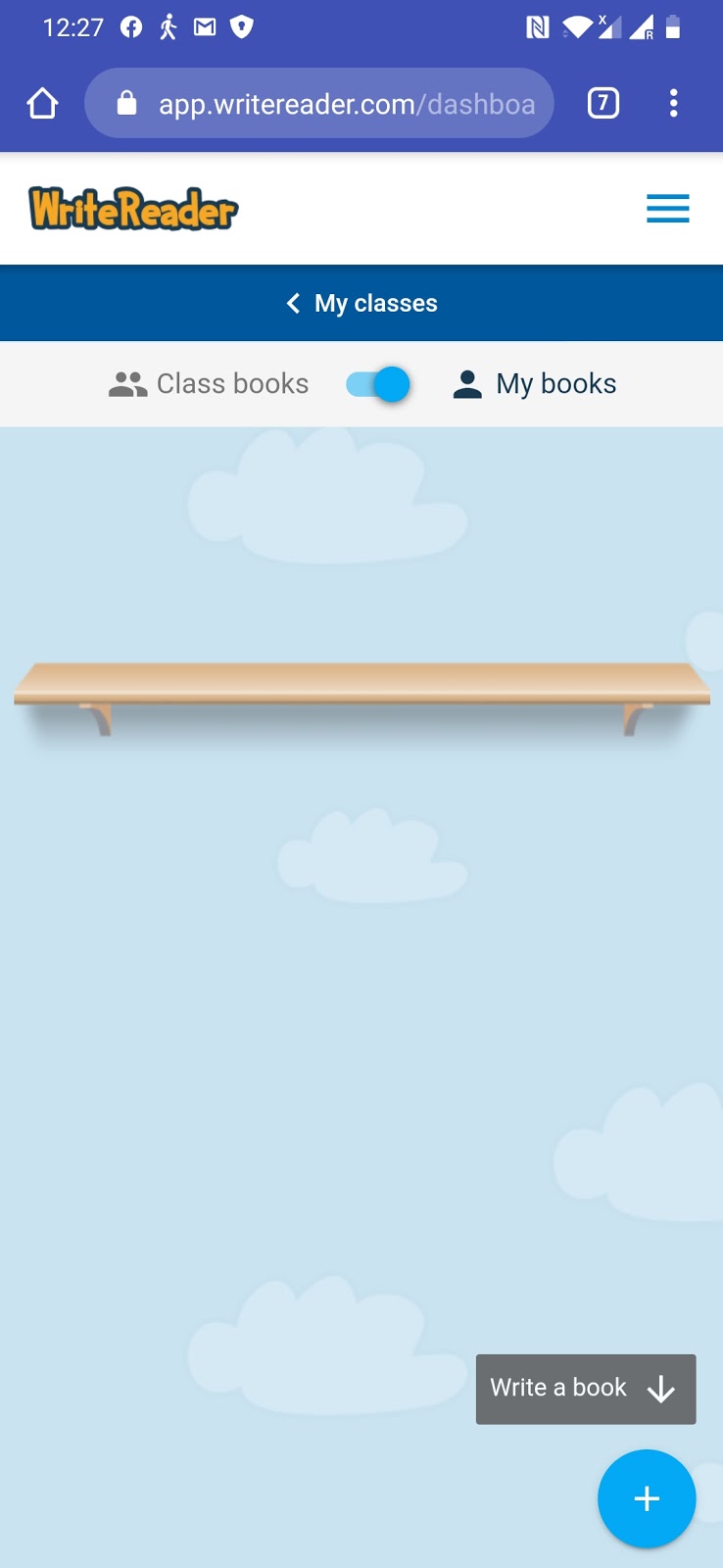
7.3 Write your name as an author and add a title "My Book" - you can change it later. Click on the image icon and browse different options. You can also upload your own photos, if you wish.

Save your option for an image today, though you can change it later. PS! Your task tomorrow is to create a story in the past using as many modal verbs as possible.

7.4 Start a new page and try to find a microphone sign. Try to record your voice.
7.5 Find a direct speech "bubble". Add it to your photo and write something into it.


might (have sent) - võib-olla oled saatnud / ehk saatsid / võimalik et oled saatnud
can't (have sent) - pole võimalik, et saatsin
must (have used) - tundub, et oled kasutanud / on ilmselge, et oled kasutanud
shouldn't (have clicked on) - poleks pidanud klikkima
should (have warned) - oleks pidanud hoiatama
might not ( have downloaded ) - võib-olla pole alla laadinud / võimalik, et pole alla laadinud
need to (wait) - on vaja oodata / tuleb oodata / pead ootama
need to (warn) - on vaja hoiatada / tuleb hoiatada / pead hoiatama
could (have gone ) - on võib-olla läinud / võib-olla läks / võimalik, et on läinud
CLICK HERE: SB ex 5-6 answers
Monday, April 6, 2020
Subscribe to:
Posts (Atom)