Task 1: Add the missing prepositions (ON, IN, AT, FOR, OVER; OF, UP, WITH, ABOUT, DOWN, BEHIND, OUT, TOWARDS)
1. do calculations ____ your head; 2. ____ example;
3. be interested ____ sth, 4. spend time ____ sth.;
5. be scattered ____ ; 6. move ____ (sisse kolima);
7. mess ____ (tühiste asjadega tegelema); 8. fit ___ ;
9. be tolerant ____ sb.: 10. turn a blind eye ____ ;
11. sit ____ the armchair; 12. remind sb ____ sth/sb;
13. ____ the beginning; 14. ____ the beginning of sth.;
15. focus ____ sth, 16. have different views ____ sth;
17. have sth ____ common; 18. ___ the middle of the square;
19. do revision ____ ; 20. be responsible ____ sth/sb;
21. ___ first (kõigepealt); 22. get ____ well with sb.;
23. give ____ (järele andma, nõustuma); 24. give ____ (loobuma);
25. make fun ___ sth/sb.; 26. make friends ____ sb.;
27. make use ____ sth.; 28. be surprised ____ sth.;
29. feel guilty ____ sth.; 30. ____ sb's surprise; 31. ____ the radio;
32. ___ ages; 33. be similar ___ sb/sth;
34. work ____ (laabuma, lahenema); 35. trip ____ (komistama);
36. take ____ (tegelema, aega kuluma); 37. break ____ (rikki minema) ;
38. check ___ sb (kontrollima); 39. count ___ sth/sb;
40. fall ____ with sth; 41. feel ____ (tujust ära olema) ;
42. feel ____ (kobamisi otsima, katsuma); 43. knock sth/sb ____;
44. pick ____ sb (norima); 45. rely ____ sb/sth
Task 2: Translate
1) Ma olen hea peast arvutamises.
2) Meid huvitab muusika.
3) Ma pean rohkem aega inglise keele õppimisele kulutama.
4) Ära tegele tühiste asjadega!
5) Ole tema suhtes kannatlik/tolerantne.
6) Mulle meeldib tugitoolis istuda.
7) Ta meenutab mulle mu õde.
8) Alguses me kirjutasime natuke.
9) Keskendume sõnade õppimisele.
10) Meil on erinevad arusaamad moest.
11) Neil pole midagi ühist.
12) Väljaku keskel on ausammas.
13) Sa vastutad oma õppimise eest.
14. Ma saan oma klassikaaslastega hästi läbi.
15) Kõigepealt ma ei tahtnud nõustuda / järele anda.
16) Minu üllatuseks tuli raadiost ainult vanamoodsaid laule.
17) Me oleme õppinud neid väljendid terve igaviku.
18) Kas saan sinu peale kindel olla?
19) Miks sa tujust ära oled?
20) Oli pime ja ma püüdsin kobamisi võtmeid üles leida.
Now check task 1
1. in 6. in 11. in 16. on 21. at 26. with 31. on
2. for 7. about 12. of 17. in 22. on 27. of 32. for
3. in 8. in 13. in 18. in 23. in 28. at 33. to
4. on 9. towards 14. at 19. for 24. up 29. about 34. out
5. over 10. to 15. on 20. for 25. of 30. to 35. over
36. up 41. down
37. down 42. for
38. on 43. over
39. on 44. on
40. behind 45. on
Wednesday, March 6, 2019

Tuesday, February 19, 2019
Book report
1. TITLE PAGE: title of the book
2. SETTING: Where were they? When did the story take place?
What was the landscape, nature like?
What about the buildings, streets or rooms? What was the weather like?
What season was it?
(min 5 sentences)
3. CHARACTERS: Who were the main characters? What were they like?
How did they look like? What did they like or dislike? What made them happy or unhappy?
(min 6 sentences)
4. PLOT: What happened in this book? What problems did they face?
How did the story develop? What was the moral of the story? What did you learn?
(8 sentences)
5. CONCLUSION: What did you think of the book? Who do you recommend reading it?
Do you plan to finish reading it? Was it easy to understand?
(min 2 sentences)
How to send it? Go to Office.com => OneNote = Klassimärkmikud => Form 8 => +Leht /+ Page
(paremale poole tekib dokument, lisa lõppu kindlasti oma nimi, töö salvestub ise)
Marking scale
1) Task - max 5p (kas täitsid ülesande vastavalt juhistele, piisavalt mahukas),
2) Spelling and grammar - max 5p,
3) Layout - max 5p (kas laused on õigete teemade all, loogiline ülesehitus, korrektsus,
kas lisatud pildid on teemakohased),
4) Deadline- (tähtajast kinnipidamine annab 5p, hilisem esitamine 0p)
18-20p "5"
14-17p "4"
10-13p "3"
>9p "2"
Monday, February 18, 2019
Prefixes and Suffixes
CLICK HERE> Game (Vali õige eesliide ja vajuta GO)
CLICK HERE> Prefixes
CLICK HERE: Word formation (easier)
CLICK HERE: Word formation 2 (easier)
CLICK HERE: Word Formation - British Council
CLICK HERE: Type of words - EnglishExercises.org
CLICK HERE> Word formation
CLICK HERE: Word formation 2
CLICK HERE> form a noun
CLICK HERE> A fishing game
CLICK HERE> Prefixes ( find the matches)
CLICK HERE: Prefixes
CLICK HERE: Nouns, adjectives, verbs
CLICK HERE: Word formation 3
CLICK HERE: Word formation 4
CLICK HERE: Self-Test
Thursday, January 17, 2019
Conditional sentences
Task 1: Type 0 (We use it when we talk about things that are generally or always true.)
Task 2: Type 1 (kui midagi juhtub, siis kavatsen teha / ennustan et nii juhtub jne)
Task 3: Type 2 (kui midagi juhtuKS, siis ma kavatseKS)
Task 4: Type 3 (kui oleKS juhtuNUD, siis oleKS teiNUD)
Task 5: Rally game
Task 6: Mixed conditionals (multiple choice)
Task 7: Mixed - fill in the blanks
Extra task
Memrise => Group form 8 => F9: Unit Money
Friday, November 23, 2018
Disasters
1) Haiti earthquake 2010
2) Afghanistan avalanches 2010
3) Afghanistan blizzard 2008
4) Heat wave in Russia 2010
5) Vargas tragedy Venezuela 1999
6) Indian Ocean tsunami 2004
7) Portugal wildfire 2017
8) M/T Haven Tanker Oil Spill Italy 1991
9) Chernobyl accident, 1986
10) Grenfell Tower fire, London 2017
11) Somerset Levels floods, 2013
12) Multi-vehicle collision, Rostock, Germany 2011
13) M/S Estonia catastrophe, The Baltic Sea, 1994
14) The Piper Alpha disaster, the North Sea, 1988
15) Alaska cold wave, 2008
Find out what happened?
Where was it? (Show on the world map)
When and how long?
What caused it?
Were people warned, evacuated?
Were there casualties?
What was the financial loss due to the disaster?
What was the impact on the nature and wildlife?
What could avoid similar disaster in the future? Your opinion.
What could people have done to stay safe or alive? Your opinion and ideas.
Find relevant photos and/or a video of max 1.30min
Thursday, November 8, 2018
Reported speech
Reported
speech: tenses and adverbs
Maria said, “……”
Direct
speech
|
Reported
speech
|
1.here
|
1. there
|
2.
now
|
2. then
|
3.
yesterday
|
3. the day before
|
4.
tomorrow
|
4. the next day
|
5.
this
|
5. that
|
6.
these
|
6. those
|
7.
today
|
7. that day
|
8.
tonight
|
8. that night
|
9.
last week
|
9. the week before
|
10.
next week
|
10. the next week
|
11.
ago
|
11. before
|
12.
soon
|
12. later
|
13.
works
|
13. worked
|
14.
wrote
|
14. had written
|
15.
am going
|
15. was going
|
16.
has seen
|
16. had seen
|
17.
were writing
|
17. had been writing
|
18.
don’t like
|
18. didn't like
|
19.
didn’t prefer
|
19. hadn't prefered
|
20.
will
|
20. would
|
21.
have to
|
21. had to
|
22.
can
|
22. could
|
Thursday, October 18, 2018
Famous Paintings
1.
 |
| CLAUDE MONET - Impression sunrise - 1872 |
He was a founder of French impressionist painting. Monet's ambition of documenting the French countryside led him to adopt a method of painting the same scene many times in order to capture the changing of light and the passing of the seasons.
2.
 |
| JAN VERMEER Girl with a pearl earring - 1665 |
Considered by many to be “the Dutch Mona Lisa” or the “Mona Lisa of the North”, this beautiful painting by the Dutch artist Johannes Vermeer features, well… a girl with a pearl earring. The painting was completed around 1665 and is on display in the Mauritshuis Gallery in the Hague, the Netherlands. He specialized in domestic interior scenes of middle-class life. Vermeer was a moderately successful provincial genre painter in his lifetime. He evidently was not wealthy, leaving his wife and children in debt at his death, perhaps because he produced relatively few paintings.
3.
The Kiss is a realistic yet geometric depiction of a kissing couple. Klimt is noted for his paintings, murals, sketches, and other objets d'art. Klimt's primary subject was the female body.He was the most influenced by Japanese art and its methods.
 |
| GUSTAV KLIMT The kiss - 1908 |
Where: Osterreichische Galerie, Vienna (Austria)
Oils and golden leaves
9.
He was a Russian painter and art theorist. He is credited with painting one of the first recognised purely abstract works.

5.
 |
| EDVARD MUNCH The scream - 1893 |
The Scream exists in four versions: two pastels (1893 and 1895) and two paintings (1893 and 1910). There are also several lithographs of The Scream (1895 and later). It has been widely interpreted as representing the universal anxiety of modern man. Munch wrote of how the painting came to be: "I was walking down the road with two friends when the sun set; suddenly, the sky turned as red as blood. I stopped and leaned against the fence, feeling unspeakably tired. Tongues of fire and blood stretched over the bluish black fjord. My friends went on walking, while I lagged behind, shivering with fear. Then I heard the enormous, infinite scream of nature."
Where: National Gallery, Oslo
Value: $123 mln. The Scream was once stolen and the thieves left a note "Thanks for the poor security."
It was painted using oil and pastel on cardboard.
6.
Located on the ceiling of The Sistine Chapel in Vatican City, Rome. The Creation Of Adam was painted by Michelangelo between 1508 and 1512 and it is just one of nine scenes from the book of Genesis that are painted on the center of the ceiling of the chapel.
 |
| LEONARDO DA VINCI The last supper - 1498 |
7.
Value: $143 mln.
8.
Where: Museum of Modern Art, New York, the USA
 |
| PIERRE AUGUSTE RENOIR Dancing at the Moulin de la Galette - 1876 |
Value: $143 mln.
8.
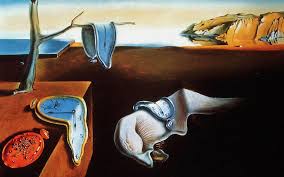 |
| SALVADOR DALI The persistence of memory - 1930 |
The Persistence of Memory is one of the most recognizable pieces in art history. This work of art is known to make people ponder on their way of life and the way they spend their time, and it is also thought that this wonderful painting was inspired by Albert Einstein’s Theory of Relativity.
9.
 |
| WASSILY KANDINSKY Composition VIII - 1923 |
10.
This painting by Van Gogh is an interesting piece because it shows the artist without his beard. It is also one of the few paintings sold by Van Gogh, and it fetched a whopping $71.5 million in 1998, making it one of his most expensive paintings ever sold.
 |
| VINCENT van GOGH "Portrait de L’Artiste Sans Barbe" |
11.
 |
| PABLO PICASSO "The Portrait of Dora Maar"
Pablo Picasso is one of the most accomplished Spanish painter, and his skill is most evident in this painting. He is the founder of a style called Cubism that shows the same picture from different angles. This picture is about a woman’s face, believed to that of Picasso’s lover, shown from different angles, thereby marking the first of many paintings in cubism style.
12.

EDUARD WIIRALT "
Eduard Wiiralt (born March 20, 1898, Saint Petersburg – died January 8, 1954, Paris) was a well-known Estonian graphic artist.
13.

KONRAD MÄGI "Landscape of Vilsandi"
Konrad Vilhelm Mägi (1 November 1878 – 15 August 1925) was an Estonian painter, primarily known for his landscape work. He was one of the most colour-sensitive Estonian painters of the first decades of the 20th century, and Mägi's works on motifs of the island of Saaremaa are the first modern Estonian nature paintings.
14.

NAVITROLLA
Heiki Trolla (born 10 August 1970 in Võru[1]), better known by his artist name Navitrolla, is an Estonian painter whose work has been described as naivist or surrealist. Most of his works depict fantastic landscapes and animals. He spent his childhood in the villages of Trolla and Navi near Võru, which is the source of his pseudonym.
15.

PAUL CEZANNE "The Basket of Apples"
Cezanne is considered the greatest master of still life painting and this is one of his most important works in the genre. It is also noted for the beautifully painted unbalanced parts and the fruits which are about to fall from the table.
|
Subscribe to:
Posts (Atom)